Table of Contents
PRF Treatment: A More Advanced Approach to Skin Regeneration
At Swiss Aesthetics, we focus on treatments that improve skin quality at a deeper level, not just temporarily change appearance. One of the most advanced regenerative treatments we now offer is PRF treatment.
PRF (Platelet-Rich Fibrin) is an evolution of PRP, designed to enhance the body’s natural healing processes and deliver longer-lasting improvements in skin quality, texture and overall regeneration.
For patients looking for a natural, biologically driven treatment that works with their own blood, PRF offers a powerful and increasingly popular solution.
What Is PRF Treatment?
PRF treatment is a regenerative injectable procedure that uses a patient’s own blood to stimulate healing, collagen production and tissue repair.
A small amount of blood is taken and processed using a specialised system to isolate a concentrated layer of platelets, fibrin and growth factors. This concentrate is then reintroduced into targeted areas of the skin.
Unlike PRP, PRF is prepared without anticoagulants. This allows the formation of a fibrin matrix, which acts as a scaffold that gradually releases growth factors over time.
The result is a slower, more sustained regenerative effect compared to traditional PRP treatments.
How PRF Works
PRF works by enhancing the body’s natural repair mechanisms.
Once injected, the fibrin matrix:
- Releases growth factors gradually
- Stimulates collagen and elastin production
- Supports tissue regeneration
- Improves blood supply to the treated area
Because the process is entirely autologous (using your own blood), the treatment is highly biocompatible and well tolerated.
Research into platelet-based treatments has shown their ability to support tissue regeneration, collagen production and wound healing in clinical settings.
Key Benefits of PRF Treatment
PRF treatment is particularly effective for improving overall skin quality rather than adding volume.
Benefits include:
- Improved skin texture and tone
- Reduction in fine lines
- Enhanced collagen production
- Natural under-eye rejuvenation
- Improved skin hydration and elasticity
- Long-term regenerative effects
Because the results develop gradually, improvements appear natural rather than immediate or artificial.
If you want to understand how collagen stimulation works in more detail, you can read about the benefits of microneedling here.
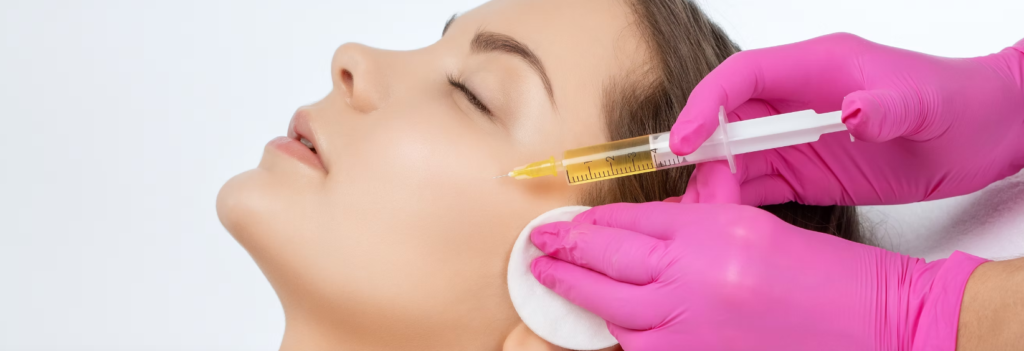
PRF Under Eyes
One of the most common and effective applications of PRF treatment is under-eye rejuvenation. This area is particularly delicate, with thinner skin and limited structural support, which makes it difficult to treat using traditional injectables without the risk of overcorrection or an unnatural appearance.
PRF offers a more refined approach by working with the skin rather than simply adding volume. As the fibrin matrix releases growth factors over time, it helps stimulate collagen production, improve circulation and gradually strengthen the skin in this area. This can lead to a reduction in the appearance of dark circles, fine lines and skin thinning, while also improving overall skin quality.
Rather than creating an immediate change, PRF supports a more natural regeneration process, allowing the under-eye area to improve progressively and subtly over time.
If you’re looking for a more immediate solution to under-eye hollowness, tear trough treatment may be another option to consider.
PRF vs PRP: What’s the Difference?
Many patients ask about the difference between PRP and PRF treatment.
Here’s a simple comparison:
| Feature | PRP | PRF |
| Preparation | Uses anticoagulants | No anticoagulants |
| Release of growth factors | Fast release | Slow, sustained release |
| Fibrin matrix | No | Yes |
| Regenerative effect | Shorter-term | Longer-lasting |
| Composition | Platelets | Platelets + fibrin + leukocytes |
In simple terms:
PRP delivers a quick boost, while PRF provides a slower, more sustained regenerative effect.
If your concern is related to expression lines rather than overall skin quality, you can learn more about anti-wrinkle injections here.
What to Expect From PRF Treatment
PRF treatment is designed to be a straightforward and minimally invasive procedure, carried out within a clinical setting. The process begins with a small blood sample, which is then placed into a specialised system to separate and concentrate the platelets, fibrin and growth factors.
Once prepared, the PRF is carefully injected into targeted areas using precise techniques tailored to the individual. The entire procedure typically takes around 30 to 45 minutes and is performed with a strong focus on control, accuracy and patient comfort.
Because the treatment uses your own biological material, it is well tolerated, and most patients find the experience manageable with only mild, short-lived discomfort.
Results Timeline
PRF works gradually, so results develop over time:
- Week 1–2: Initial skin improvement
- Week 3–6: Increased collagen activity
- 2–3 months: Visible improvement in skin quality
A course of treatments is usually recommended for optimal results.
Is PRF Treatment Right for You?
PRF treatment is particularly suited to individuals who are looking to improve skin quality in a natural and progressive way, rather than relying on treatments that focus on volume or immediate structural change. It appeals to those who prefer subtle results that develop over time, while still delivering meaningful improvements in areas such as skin texture, elasticity and under-eye concerns.
It can be especially beneficial for patients who are beginning to notice early signs of ageing, or for those who want to support long-term skin health through regenerative approaches. As with any aesthetic treatment, suitability is always determined through a professional consultation, where your skin condition, goals and expectations can be assessed in detail.
You can also explore our full range of injectable treatments to understand which option may be most suitable for your concerns.
PRF for Hair Restoration
While this guide focuses on the skin rejuvenation benefits of PRF, the same regenerative principles can also be applied to the scalp. PRF Hair Treatment uses your body’s own growth factors to help stimulate hair follicles and support healthier, thicker-looking hair in suitable candidates.
If you’re concerned about hair thinning or early hair loss, you can learn more in our complete guide to PRF Hair Treatment.
Final Thoughts
PRF treatment represents a significant step forward in regenerative aesthetics.
By using your body’s own biological materials in a more advanced way than traditional PRP, it offers a natural approach to improving skin quality, texture and long-term regeneration.
Book a consultation to discuss your skin concerns and treatment options.
FAQ’s
Which is better PRP or PRF?
PRF is generally considered more advanced because it releases growth factors more slowly, leading to longer-lasting regenerative effects. However, the best option depends on your individual concerns and treatment goals.
Is three sessions of PRP enough?
In many cases, a course of three PRP treatments can provide noticeable improvement. However, results vary depending on the condition being treated, and maintenance sessions may be recommended.
Is PRF more painful than PRP?
PRF is generally no more painful than PRP. Both treatments involve small injections, often described as mild discomfort or brief pinpricks.
Does PRF last longer than PRP?
Yes, PRF typically lasts longer than PRP due to its fibrin matrix, which allows for a sustained release of growth factors over time.


